Curated by Karen Kraven
Abbas Akhavan, Lili Huston-Herterich, Sukaina Kubba, Jeremy Laing, Jenine Marsh, Diyar Mayil, Marisa Portolese, Swapnaa Tamhane & Aimée Zito Lema
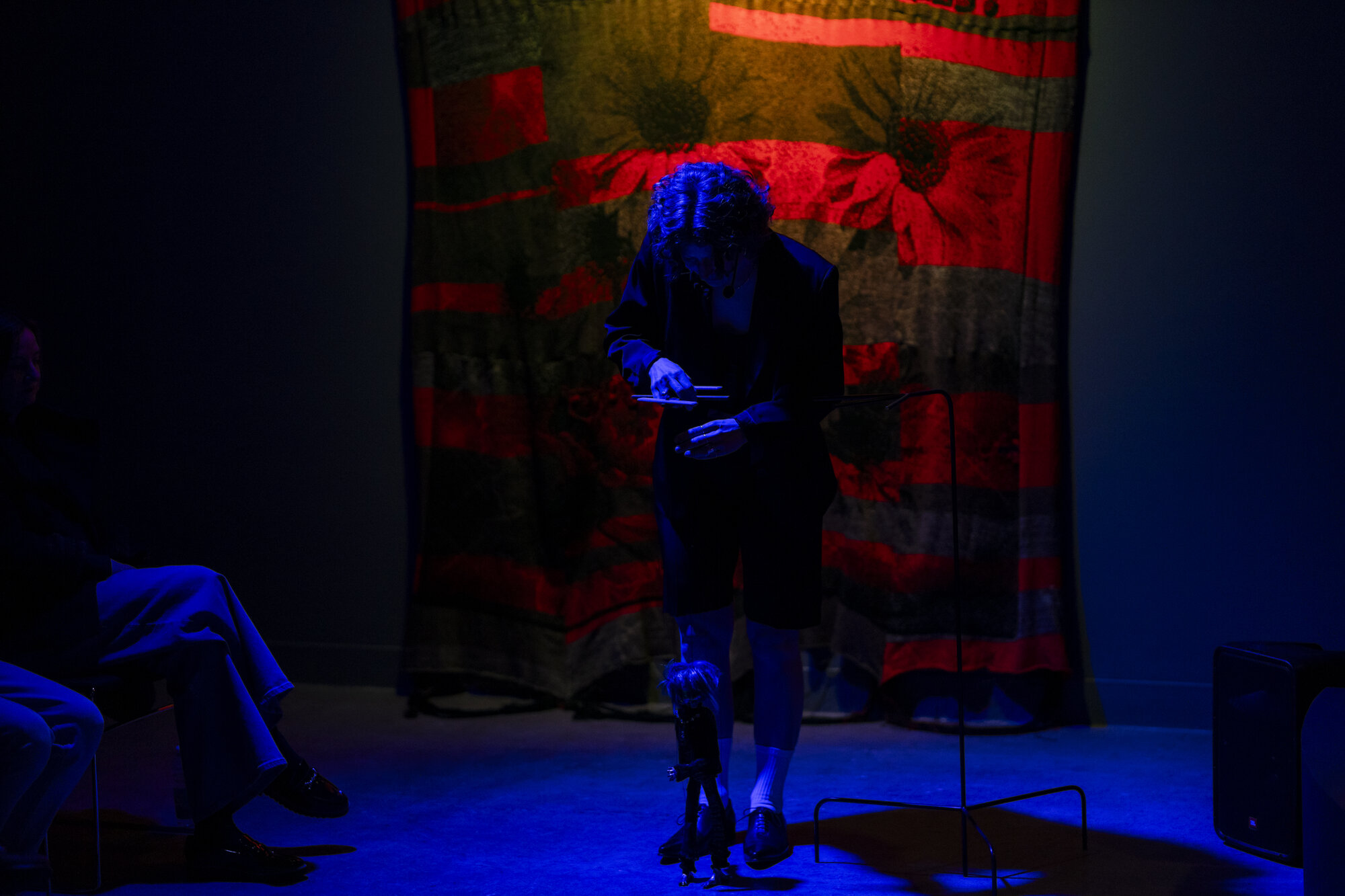
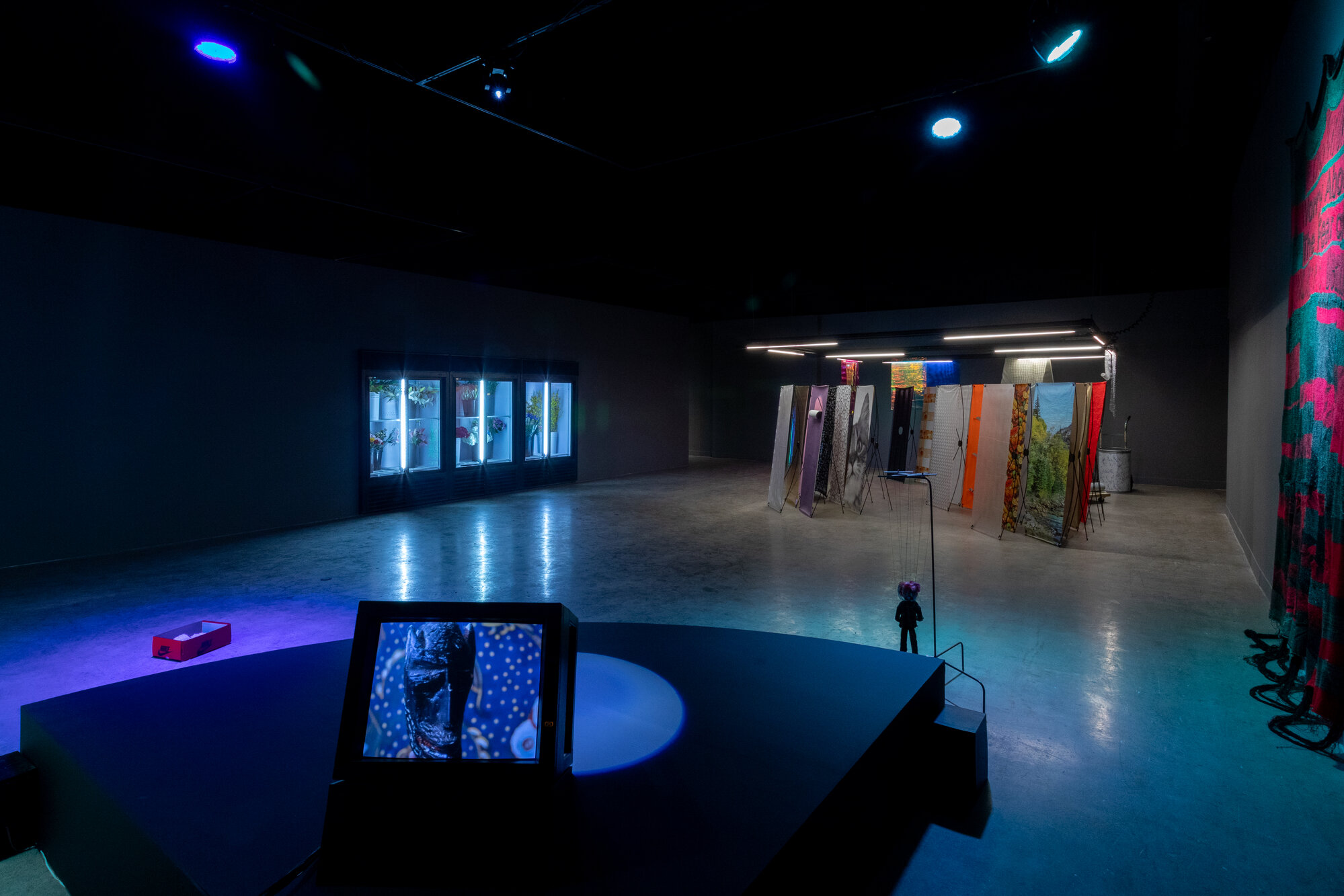
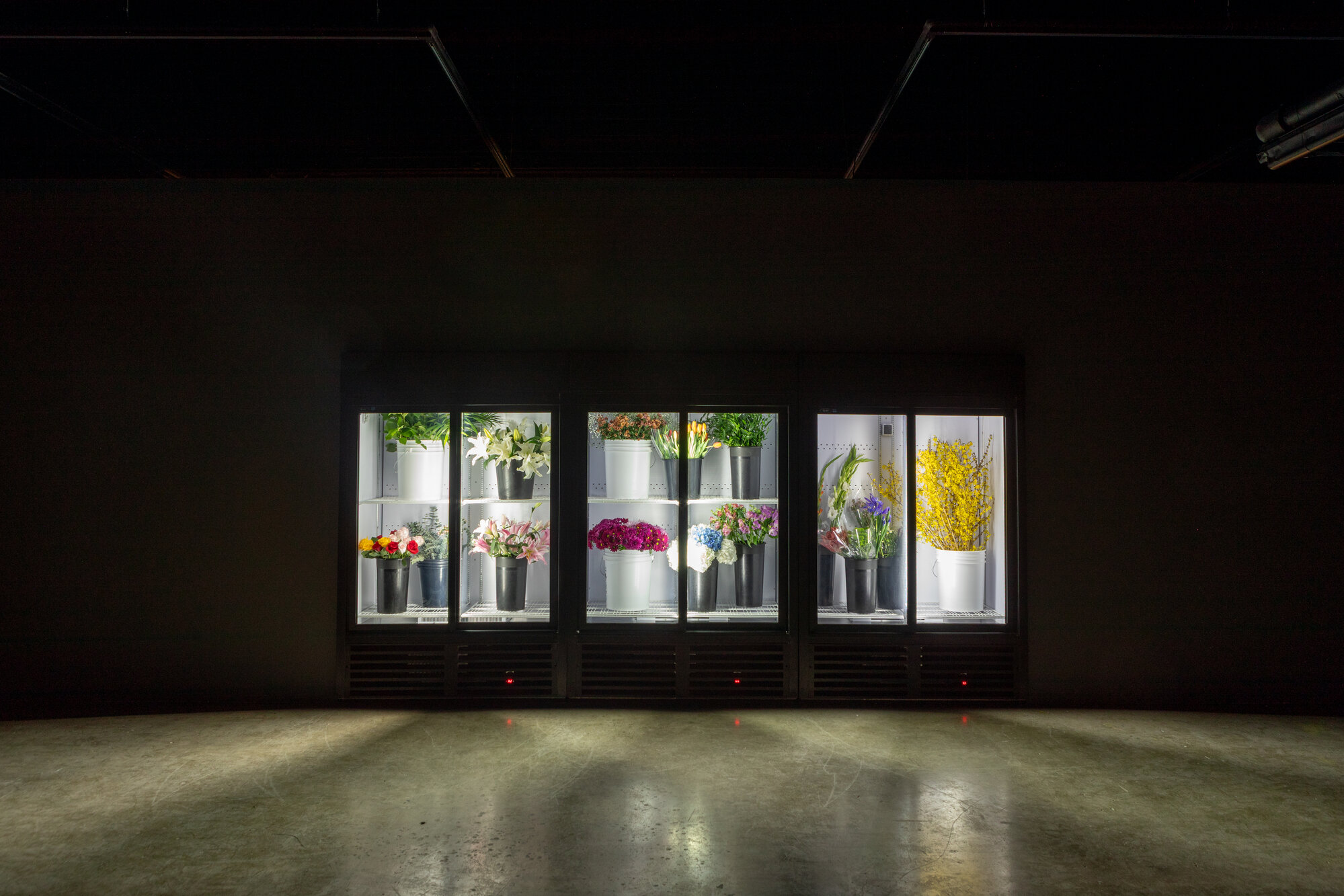
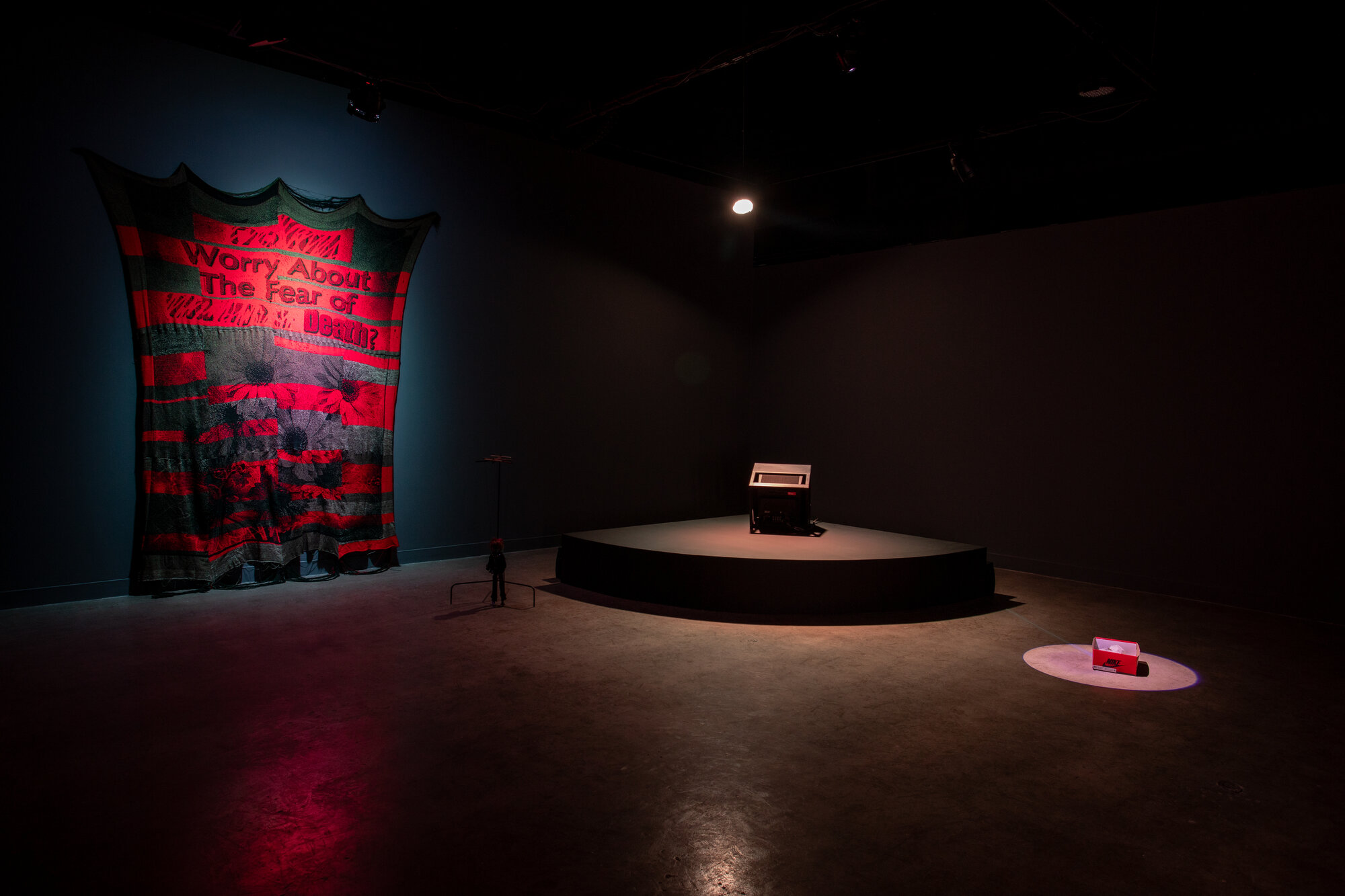
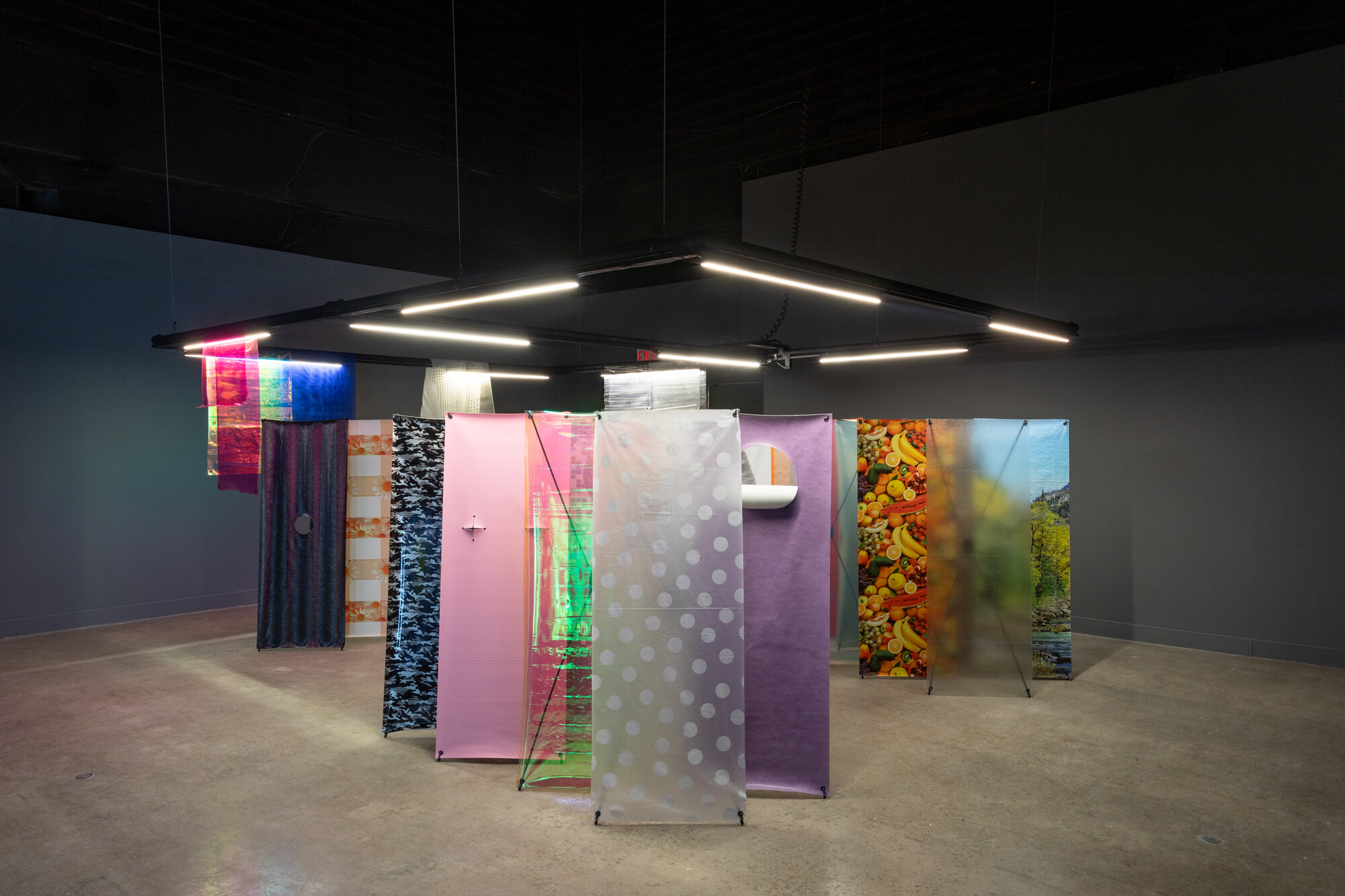
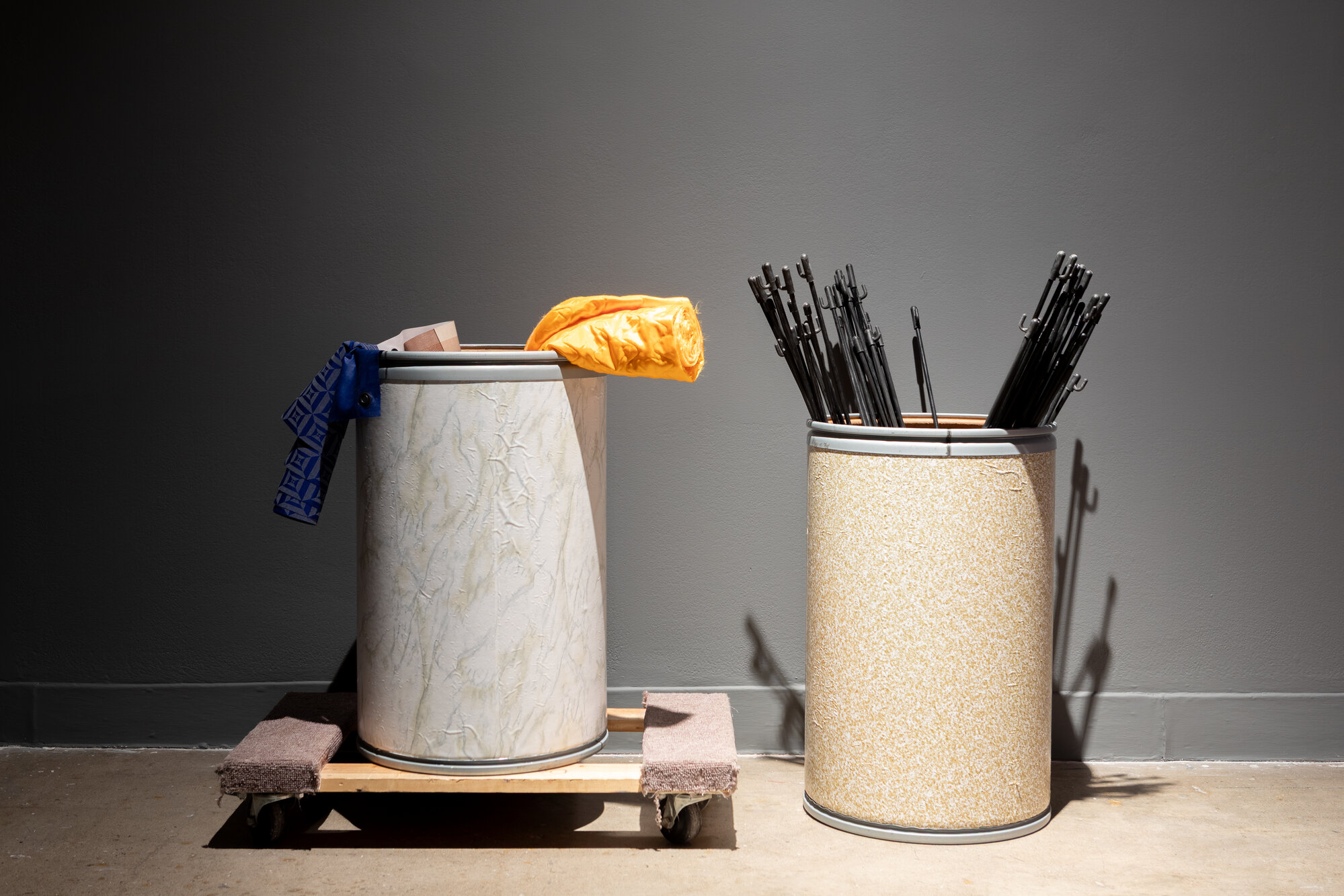
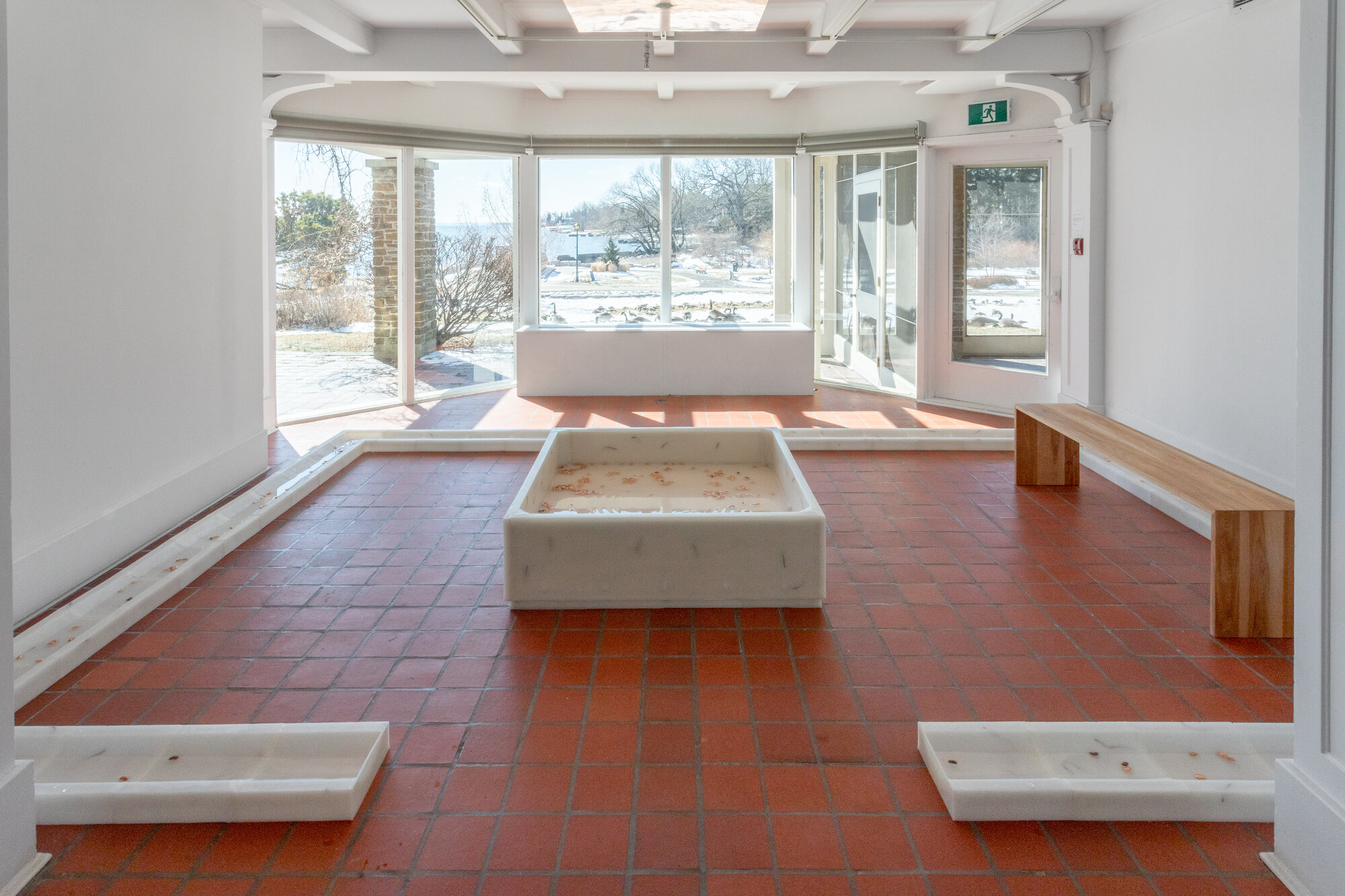
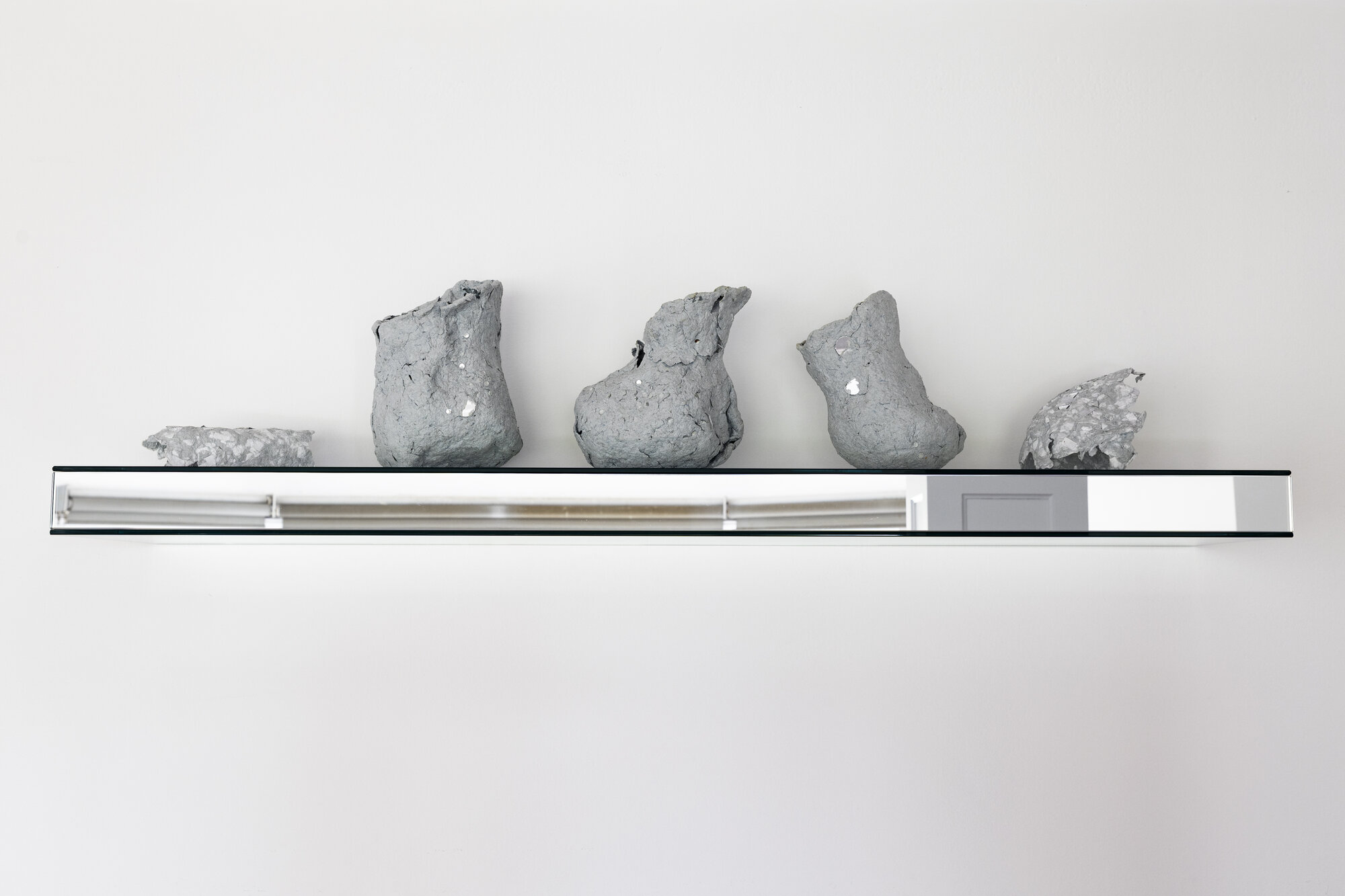
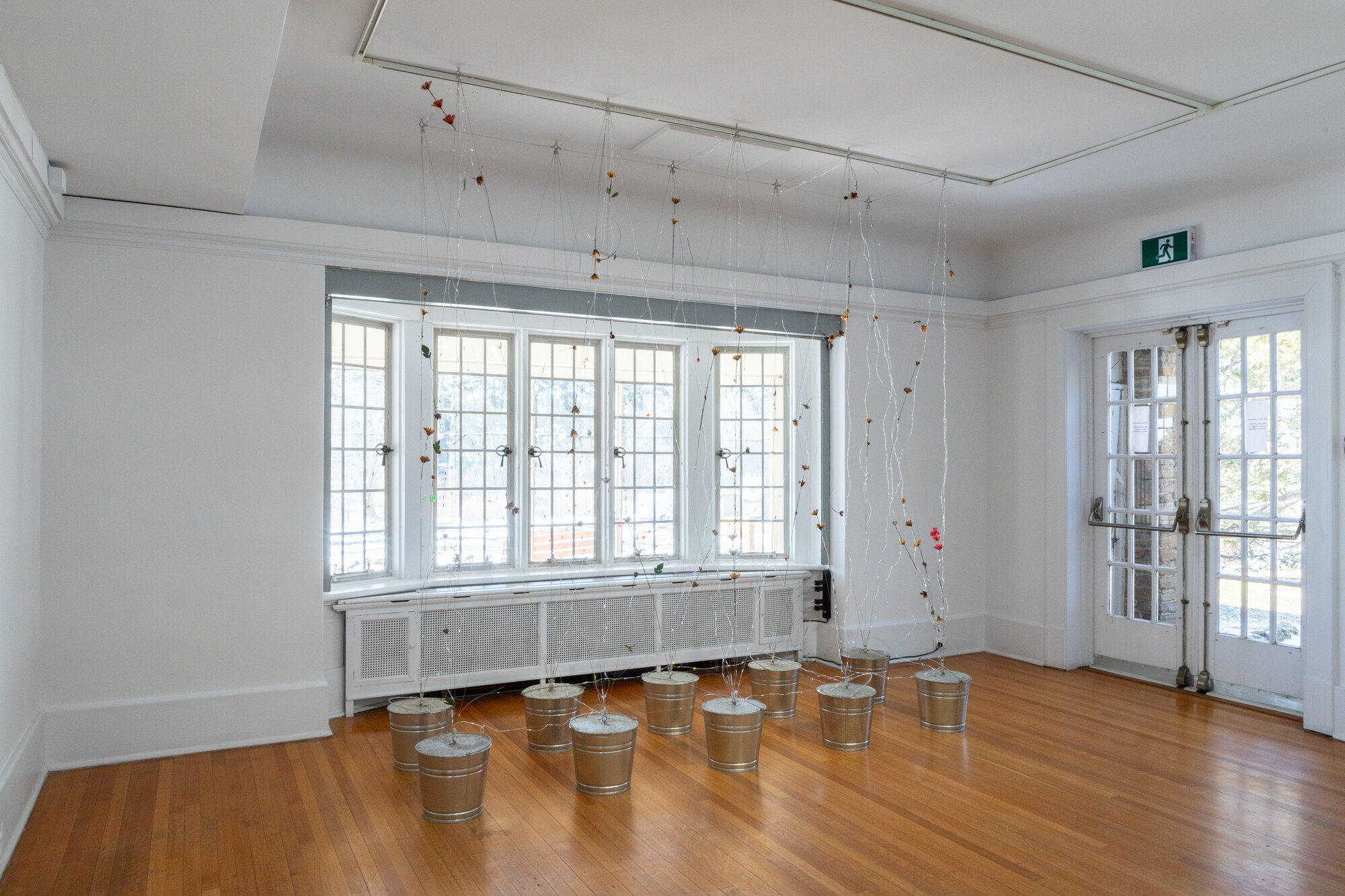
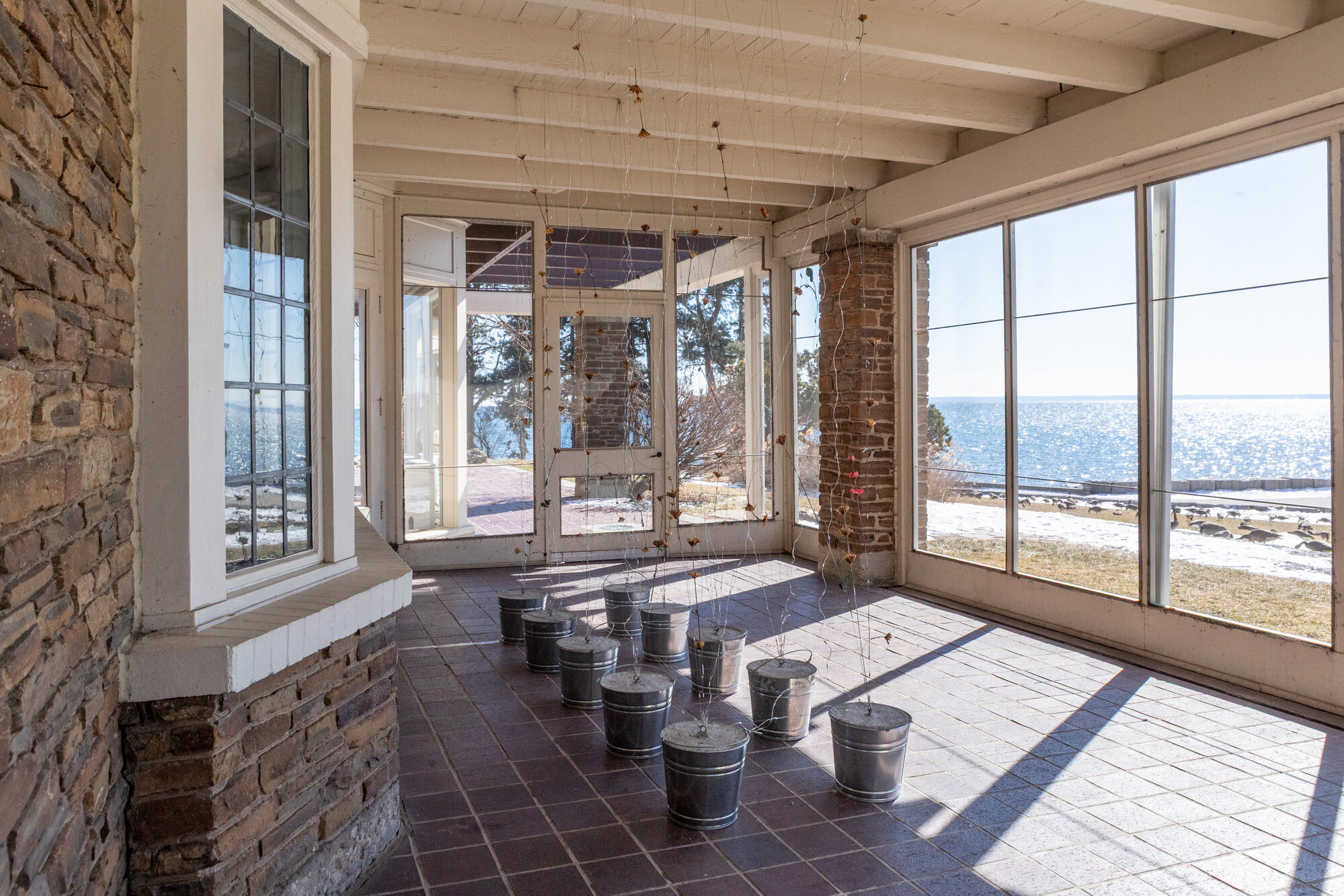
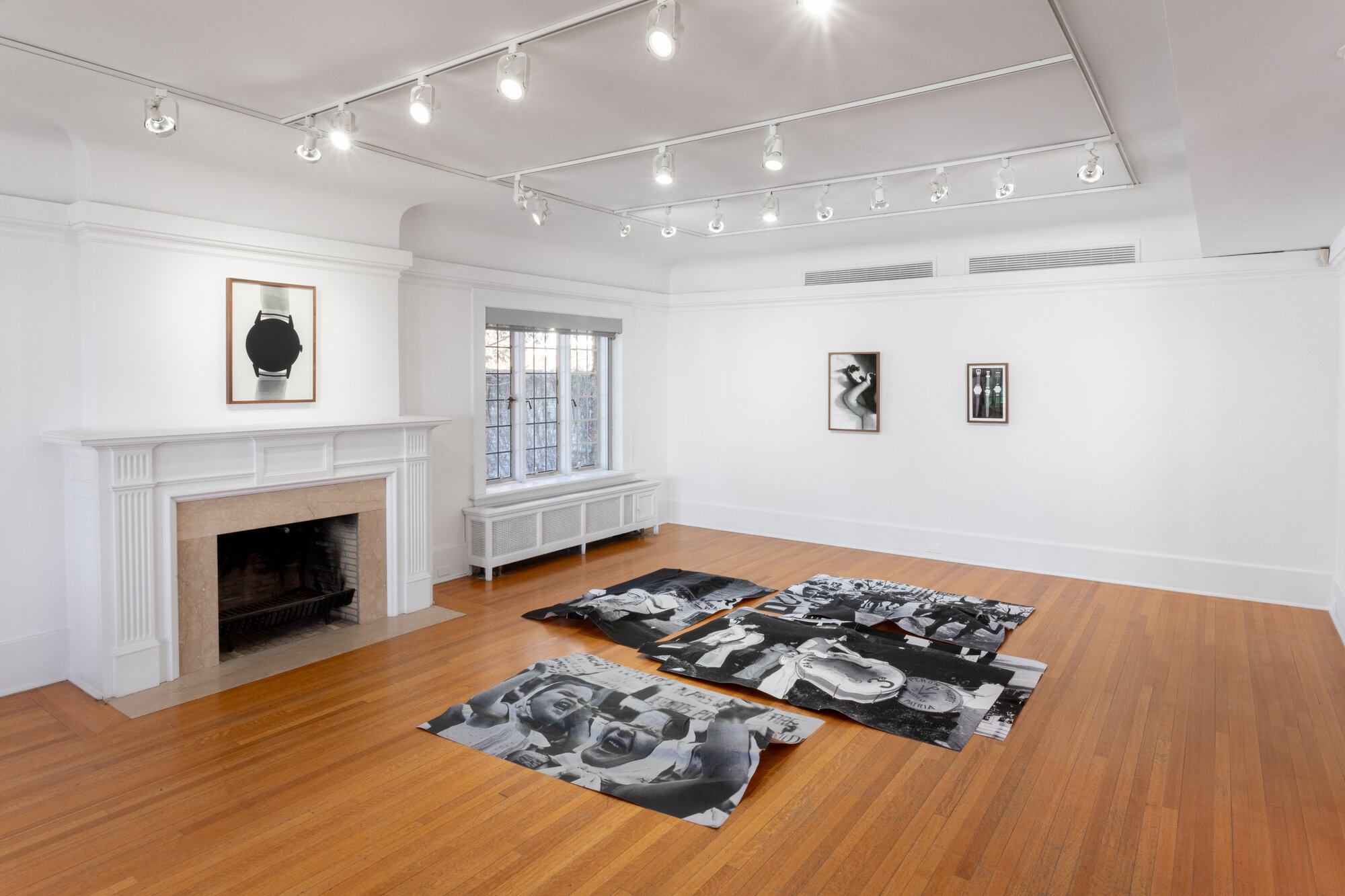
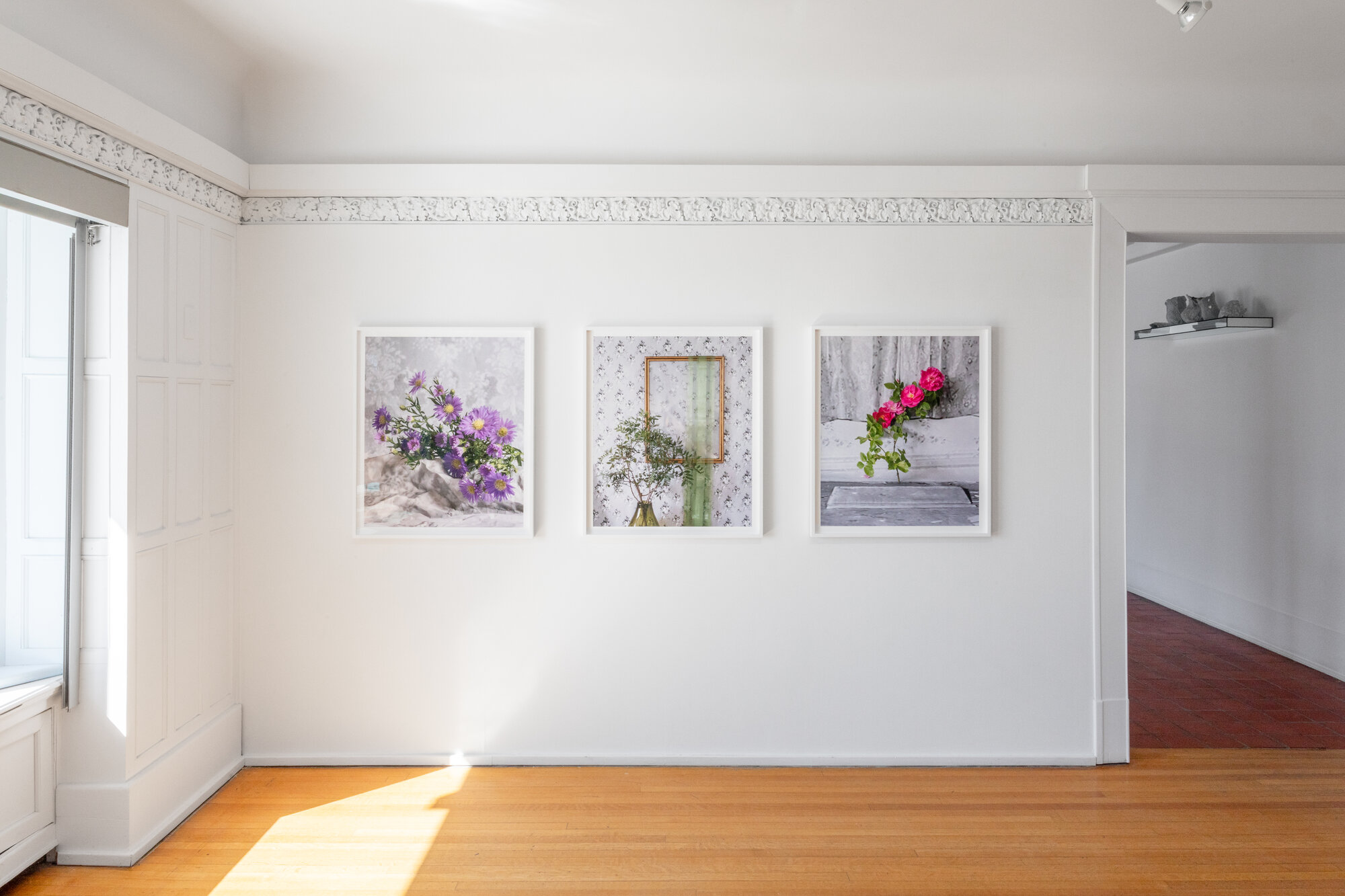
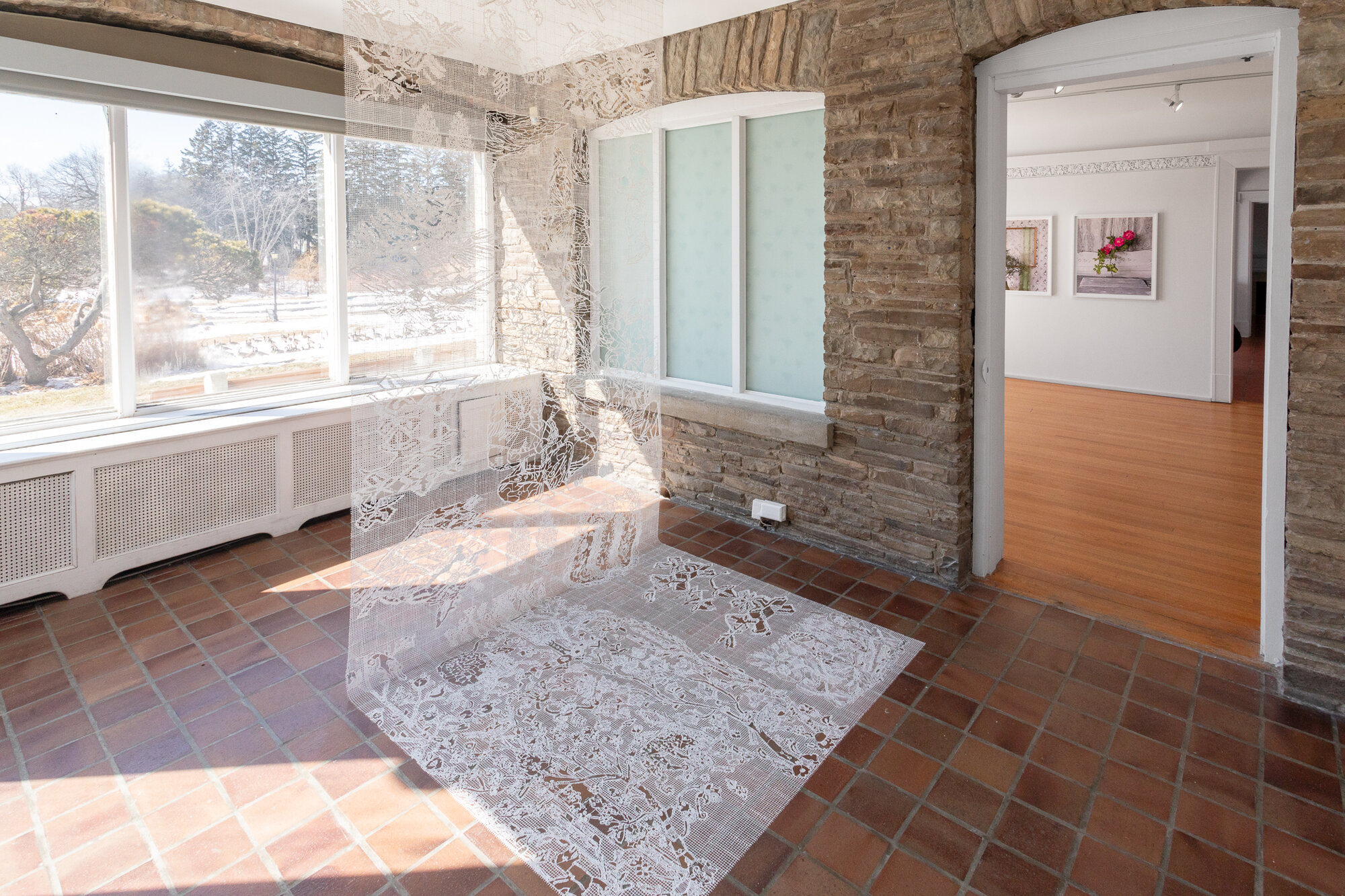
Les Fleurs du Mal brings together artworks that explore flowers, gardens, mourning, and remembrance. Grappling with the complexities of the thresholds between life and death, these works consider commemoration, materiality, and embodiment to imagine futures and elsewheres, while also reflecting on the disenchantment within those fantasies and the fleeting beauty of everyday life.1
Prior to floral arrangement, the cut flower is poised in anticipation of being assigned meaning. Bouquets are often substituted for words or sentiments; their poetics insist on both the affirmation and fragility of life. The flower becomes a stand-in—like welcome company offered by those who could not be there, or sent in lieu of genuine support.
The garden is poetic and contradictory: a place of impermanence and decay, a rebel outpost and a communal paradise. On the one hand, it offers sanctuary; on the other, it performs “the act of possessing.”2 This tension “makes visible one of the most interesting aspects of gardens: that they exist on the threshold between artifice and nature, conscious decision and wild happenstance.” 3 The garden is an experiential space that spills beyond its boundaries, as it is as much about the gardener and the surrounding world as it is about the plants and ecosystems within. Mapping otherwise, the metaphors of the flower garden become a stage for narratives of transformation.
The exhibition borrows its title from Baudelaire’s infamous book, which explores themes of death, a fascination with evil, and the search for a utopian ideal. Often translated into English as The Flowers of Evil, the French title can also be read as Wrong Flowers, Flowers of Illness, or Flowers of Pain. Mal is an ambiguous word in French. It asks: what can be made from human pain, cruelty, longing, and greed?
1. Charles Baudelaire, The Flowers of Evil, translated by Nathan Brown, Verso, 2024, p.20
2. Jamaica Kincaid, The Disturbances of the Garden, The New Yorker, August 31, 2020
3. Olivia Laing, The Garden Against Time, WW Norton, 2024, p. 14

About The Artists
Born in Tehran and based between Montreal and Berlin, Abbas Akhavan’s multidisciplinary practice reflects on the relationships between place and history, attending to the geopolitical forces which define spaces. Akhavan’s practice ranges across site-specific ephemeral installations to drawing, video, sculpture, and performance. The direction of his research has been deeply influenced by the specificity of the sites in which he works, including the architectures that house them, the economies that surround them, and the individuals that frequent them. The concept of the garden and by extension, the spaces and species just outside the home, such as the backyard, public parks and other domesticated landscapes, have been foundational components in his work. In recent large-scale installations, Akhavan recreates cultural sites affected by international conflicts, attending to the multivalent ways in which ongoing geopolitics fight for control of historical narratives.
Lili Huston-Herterich is an American-Canadian artist based in Rotterdam, The Netherlands. Lili has a situated practice both materially and conceptually. She works with what she is in close vicinity to in order to develop a dialogue from her current position historically, geographically, and economically. She works alone and with other people and makes sculpture, performance, sound, and video.
Sukaina Kubba is an Iraqi-born Toronto-based artist whose work is rooted in material and cultural research, material experimentation, storytelling and drawing connections. Kubba has exhibited at Carleton University Art Gallery, Ottawa, Western Exhibitions, Chicago and Patel Brown, Montreal. In Toronto she has shown at Venus Festival, two seven two gallery, Patel Brown, Greater Toronto Art Triennial at MOCA , Mercer Union SPACE Billboard Commission, the plumb, The Next Contemporary, Art Gallery of Ontario, and Aga Khan Museum. She has also exhibited in Scotland at Dundee Contemporary Arts, Centre for Contemporary Art, Glasgow, Glasgow International and Kendall Koppe, Glasgow. Kubba will exhibit at The Robert McLaughlin Gallery, Oshawa in April, her first institutional solo in Canada. Kubba has completed residencies at the International Studio and Curatorial Program, New York and La Wayaka Current, Chile. She is a sessional lecturer in Visual Studies at the University of Toronto, and was previously a curator and lecturer at The Glasgow School of Art.
Jeremy Laing is a Canadian artist who makes objects, spaces, and situations for embodiment and relation. Through the synthesis of craft, conceptual, and social modes, their work explores the interrelation and transitional potential of people and things, materials and meanings, and questions the normative logics of who and what is considered to matter, or not.
Jenine Marsh (b. 1984, Calgary AB) lives in Toronto. Engaging with themes of agency, mortality and value, her sculpture and installations have been exhibited at Kitchener-Waterloo Art Gallery, ON (2025); the Buffalo Institute for Contemporary Art, NY (2025); the Goldfarb Art Gallery, Toronto; Ensemble, New York (2024); Prairie, Chicago (2024); Ashley, Berlin (2024); the Morris and Helen Belkin Art Gallery, Vancouver (2024); Cooper Cole, Toronto (2023); Joe Project, Montreal (2023); Gianni Manhattan, Vienna (2023); Union Pacific, London (2023); Night Gallery, Los Angeles (2022); Franz Kaka, Toronto (2019); Centre Clark, Montreal (2019); Entrée Gallery, Bergen (2018), and Lulu, Mexico City (2015). Marsh’s work has received funding from the Canada Council for the Arts, Partners in Art, the Chalmers Arts Fellowship, the Toronto Arts Council, and the Ontario Arts Council. Jenine received her BFA from the Alberta University of the Arts in 2007, and her MFA from the University of Guelph in 2013. She is currently a doctoral candidate at York University.
Diyar Mayil is an artist working in sculpture, installation and performance. She often works with the familiar to address issues of comfort, discomfort and the blurring of public and private contexts. She is the laureate for the Bronfman Fellowship in Contemporary Art (2022) and the recipient of the Liz Crockford Award (2023). Her work has been supported by Canada Council for the Arts, CALQ, Conseil des arts de Montréal and has recently been shown at Whitney ISP, Articule, Circa Art Actuel and Centre Clark. She holds a BFA and MFA from Concordia University. Originally from Istanbul, she now lives and works in Montréal.
Marisa Portolese is a Canadian-Italian visual artist born in Montreal, Quebec. She is a Professor in the Faculty of Fine Arts at Concordia University, where she obtained an MFA. Portraiture, representations of women, autobiography, familial and cultural heritage are recurrent subjects in her artistic practice. She has produced photographic projects featured in numerous solo and group exhibitions in Canada, Europe and the United States. From 2017 to 2019, she was the Artist-in-Residence at the McCord Museum in Montreal. Her work has been widely reviewed and featured in various magazines and newspapers, and she has four published monographs: Un Chevreuil à la Fenêtre de ma Chambre, Antonia’s Garden, In the Studio with Notman and Goose Village. She has been awarded grants from the Canada Council for the Arts and the Québec Arts Council, and from the Social Sciences and Humanities Research Council, and has received a Concordia University Research Fellow Award in 2022. Her works are included in various corporate, museum and private collections.
Swapnaa Tamhane’s art practice is dedicated to drawing and the material histories of cotton and jute. She has an MFA in Fibres & Material Practices, Concordia University, Montreal, where she was recently an Artist-in-Residence. She has been supported by SSHRC, Canada Council for the Arts, Ontario Arts Council, Shastri Indo-Canadian Institute, and was an International Museum Fellow with the Kulturstiftung des Bundes in 2013. Her research extends to material culture, and with designer Rashmi Varma, she wrote SĀR: The Essence of Indian Design, Phaidon Press (2016). She has exhibited her work at Nature Morte, Delhi; articule, Montreal; Sculpture Park Jaipur; Green Art Gallery, Dubai; Victoria & Albert Museum, Dundee, Scotland; and has had solo exhibitions at Royal Ontario Museum, Toronto; and Surrey Art Gallery, Surrey, British Columbia, Mead Art Museum, Amherst, MA, and she has been shortlisted for the Sobey Art Award 2025, with an exhibition at the National Gallery of Canada, Ottawa.
Aimée Zito Lema (1982, Amsterdam) is a Dutch-Argentinean visual artist living and working in Amsterdam. Her research-based yet intuitive practice engages archival material and personal memory to explore how history is transmitted across generations. Zito Lema was a resident at the Rijksakademie Amsterdam. Her work has been exhibited internationally and is held in public and private collections, including the Stedelijk Museum, Amsterdam. Since 2019, she has been teaching at the Gerrit Rietveld Academie.
In 2025, Zito Lema was selected as the first Artist-in-Residence of the Rijksmuseum, Amsterdam.
Tuesday – Saturday:
10:00 AM – 5:00 PM
Monday (by appointment)
Closed Sunday + statutory holidays
Free Admission